
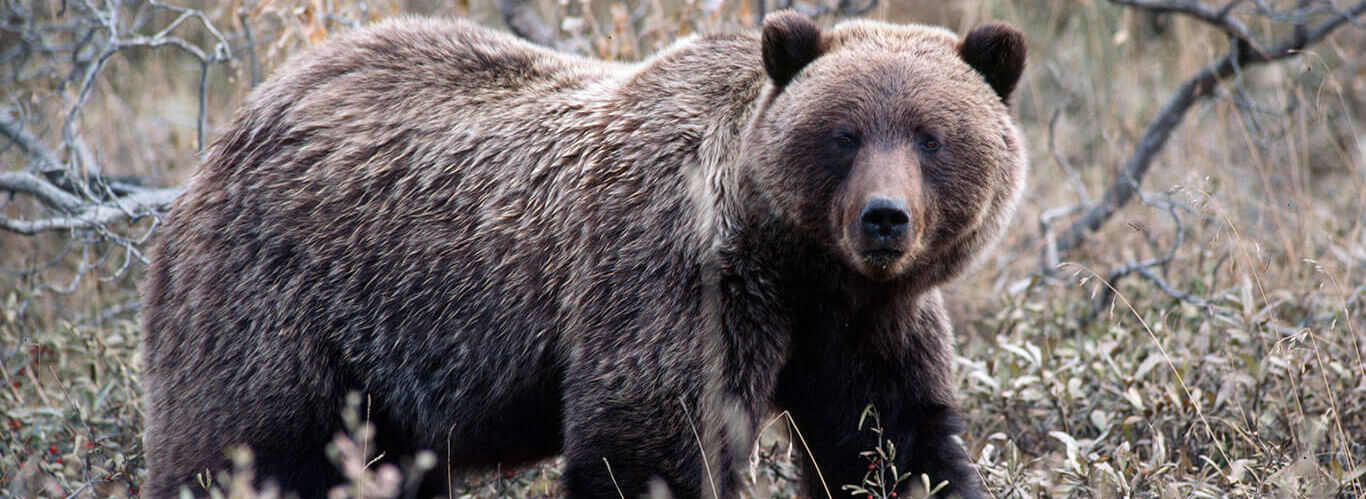
Grizzly Recovery and the Endangered Species Act: What You Should Know
Biologists estimate that around 100,000 grizzly bears once roamed western North America. Roughly 50,000 of them lived across the present-day Lower 48 states of the U.S., from the California coast to the Rocky Mountains to the Great Plains. But in the 19th and 20th centuries, human encroachment into grizzly habitat and general persecution of predator species pushed the Great Bear to the edge of extinction south of Canada.
Over the last 50 years, robust conservation efforts have helped the grizzly begin a path toward long-term recovery in the Northern Rockies region. At the same time, human development has continued to fragment wildlife habitat and grizzlies remain confined to just a fraction of their historic range in the Lower 48. As the public debates how and by whom grizzly bear management should continue, here’s what you need to know about grizzlies, their recovery and their protection moving forward.
Back from the Brink

The passage of the Endangered Species Act in 1975 marked the beginning of the grizzly’s recovery story. With fewer than 800 grizzlies enduring in the Lower 48, nearly all of them in the sanctuaries of Glacier and Yellowstone national parks, the U.S. Fish and Wildlife Service (USFWS) listed the species as threatened. As a “threatened” species, grizzlies receive a level of federal protected status one tier below those listed as “endangered,” but still merit legal safeguards to prevent hunting and protect habitat designated as critical to the species by USFWS.
After initial listing, a 1982 management plan detailed the recovery work ahead, naming six grizzly bear recovery zones and population targets for each. Careful management and collaborative coexistence work over the next four decades allowed the grizzly population strongholds in the Greater Yellowstone Ecosystem (GYE) and the Northern Continental Divide Ecosystem (NCDE) in and around Glacier National Park to recover to a combined total of around 2,000 bears. These grizzlies are now repopulating broader geographies from their protected cores, returning to historic habitat on central Montana’s prairies and elsewhere.
In 2017, population growth led the USFWS to briefly remove the GYE grizzly population from the threatened species list. State agencies in Montana, Wyoming and Idaho received full management authority over the species and began making plans for limited hunting seasons. Tribes and a coalition of nonprofits challenged the delisting decision, however, taking it to court where a federal judge ruled that, despite the increase in sheer numbers, the GYE population still warranted federal protection and management oversight due to the lack of natural connectivity and genetic exchange with other populations.
The Path to Durable Recovery
While the GYE and NCDE grizzly populations have met their initial 1982 recovery targets, the situation is different elsewhere. According to recent DNA analysis, only around 50 grizzlies persist in the American portions of the Cabinet-Yaak and Selkirk ecosystems while the Bitterroot and North Cascades recovery zones feature vast cores of bear habitat, yet neither currently sees more than rare vagrant grizzlies within its boundaries. That could change under new reintroduction proposals, but all four areas outside the GYE and NCDE remain well below recovery goals.

If grizzly bears are to develop stable populations in all six recovery zones and carve out a durable future in the Lower 48, a combination of habitat protection and conflict prevention must allow bears from the GYE and NCDE to range across the region and prevent the genetic isolation of subpopulations. Connecting habitat will also gain importance as climate change alters the grizzly’s dietary landscape, forcing bears to travel farther as they adapt to shifting seasons and food availability.
The legal exchanges of the past decade represent a chapter in the ongoing debate about the long-term role of federal ESA protection in species recovery, not just for grizzlies but for more than 2,000 other protected plant and animal species. At its heart, the debate questions who should be responsible for grizzly bear management and whether delisting some or all of the Lower 48’s grizzly populations is an appropriate step at this point in the species’ conservation story.
Where Vital Ground Stands
As a group dedicated to the long-term recovery of grizzly bears in North America, Vital Ground closely monitors all decisions, policies and management plans that impact grizzlies on both the federal level and in the various states that are or could be home to grizzly populations. As a land trust, we hold fast to our mission of protecting habitat and preventing conflicts, work that will remain urgent regardless of the grizzly’s federal protection status. While we will submit public comments when proposals relate directly to our ability to fulfill that mission, Vital Ground is not taking a position on delisting.

While we view the grizzly’s recovery progress in Greater Yellowstone and the NCDE as a hard-earned conservation success, much work remains to achieve Vital Ground’s larger vision of a connected landscape from the GYE into Canada across which bears and other wide-ranging species—from wolverines to pronghorns to wolves—have room to roam and adapt. More than a single delisting decision, the grizzly’s long-term recovery in the Lower 48 will be determined by sustained regionwide collaboration between federal, tribal and state agencies, conservation groups, and the communities and landowners of grizzly country.
Regardless of listing status or human-mediated translocation efforts, natural connectivity and undeveloped open space will remain important goals for long-term species stability. That’s why Vital Ground dedicates the majority of our focus and efforts to the lasting good achieved through permanent habitat protection.
In an unpredictable political and ecological time, we find consistency in our work with landowners who voluntarily protect the crucial private lands that connect a larger regional landscape. Meanwhile, our longstanding conflict prevention partnerships enable the use of time-tested practices and innovative technologies so people can continue to coexist with grizzlies and other native predators.
Just as the grizzly’s yearly patterns of foraging, mating and denning continue amid the current delisting debate, our own work is far from finished. Learn how you can get involved and help grizzlies today!